Labels


Tuesday, 27 April 2010

Biology: Japanese Macaque


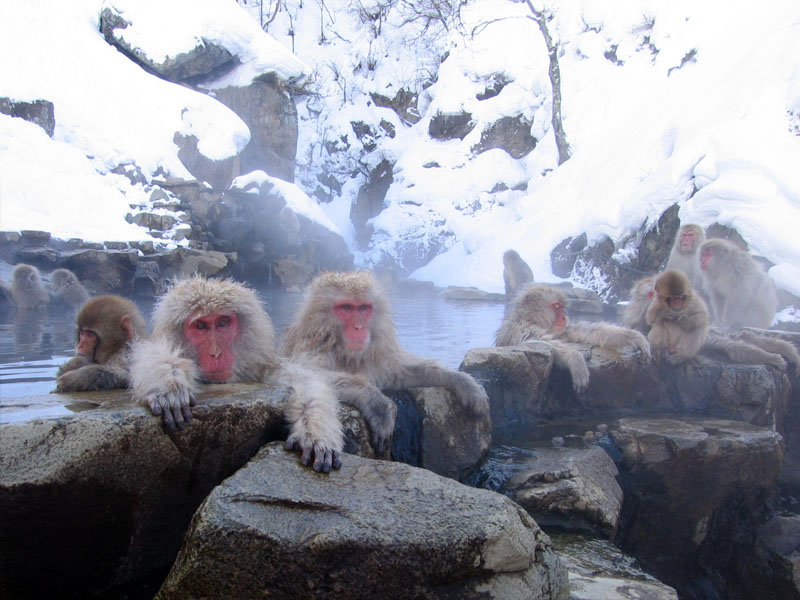
The Japanese Macaque lives in mountainous areas of Honshū, Japan. It survives winter temperatures below -15 °C (5°F), and is perhaps most notable for the amount of time it spends in naturally heated volcanic hot springs. It has a body length ranging from 79 to 95 cm, with a tail length of approximately 10 cm.

It feeds on seeds, roots, buds, fruit, invertebrates, berries, leaves, eggs, fungi, bark, cereals and in rare cases even fish. The Japanese Macaque is a very intelligent species. It is the only animal other than humans and raccoons that is known to wash its food before eating it. The macaque has other unusual behaviors, including bathing together in hot springs and rolling snowballs for fun.

Did you know?

In recent studies it has been found that the Japanese Macaque can develop different accents, like humans.

Sources: Wikipedia

Tuesday, 13 April 2010

Biology: Fastest Animals

Fastest running animal: Cheetah.

  • Latin name: Acinonyx jubatus.
  • Speed: Between 112 and 120 km/h (70 and 75 mph). It can go from 0 to 103 km/h (64 mph) in three seconds.
  • Info: Cheetahs like to live in wide open spaces like grasslands, though they can be found in a variety of locations. The cheetah is a carnivore, eating mostly mammals under 40 kg (88 lb), including the Thomson's Gazelle, the Grant's gazelle, the springbok and the impala. The cheetah hunts by vision rather than by scent.
Sources: Wikipedia

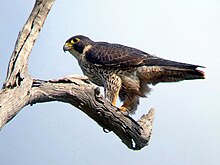
Fastest flying animal: Peregrine Falcon
  • Latin name: Falco peregrinus
  • Speed: 200 mph (320 km/h).
  • Info: The Peregrine falcon is a formidable predator. Worldwide it is estimated to prey on 1500 - 2000 bird species. Those that nest on Arctic tundra and winter in South America fly as many as 15,500 miles (25,000 kilometers) in a year.
Sources: Wikipedia, National Geographic

Fastest swimming animal: Sailfish

Latin name: Istiophorus Platypterus

Speed: 68 mph (110 km/h)

Info: The two main subspecies of sailfish, Atlantic and Indo-Pacific, range throughout the warm and temperate parts of the world’s oceans. They feed on schools of smaller fish like sardines and anchovies.

Sources: National Geographic

Monday, 12 April 2010

Social Studies: What kind of name is that?

I've wondered why countries aren't pronounced or even named in their native language.

Here are some examples:

English: Japan
Japanese (English characters): Nihon-koku

English: Hungary
Hungarian:
Magyarország

En
glish: Egypt
Arabic:
Miṣr or Egyptian: Kemet

I know from learning languages there are difficulties in pronunciation but they could make it somewhat similar.

Sources: Wikipedia (Japan, Hungary, Egypt).

Tuesday, 30 March 2010

Biology: True or False?

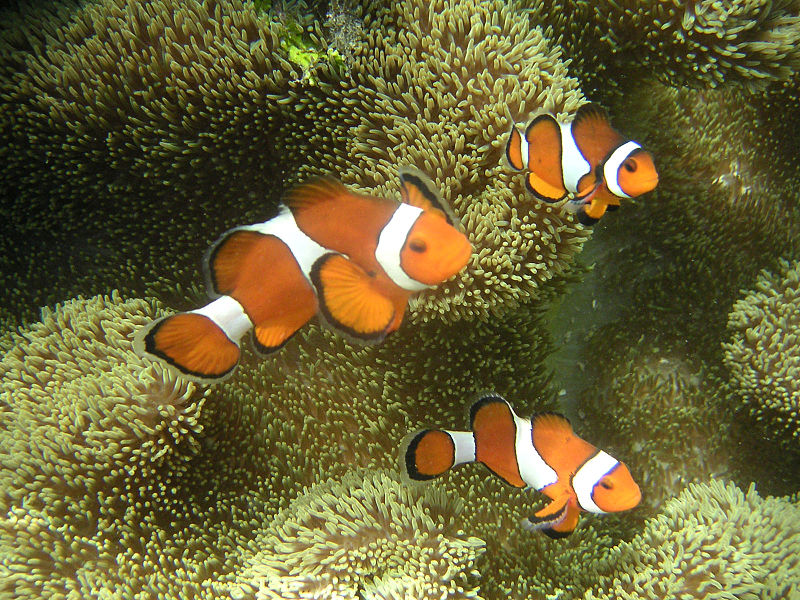
What is the difference between the True Percula Clownfish (Amphiprion percula) and the False Percula Clownfish (Amphiprion ocellaris)?

These two species are very similar but have subtle differences. The most reliable is that the True Percula Clownfish has ten spines on its first dorsal fin (the fin on top of its body closest to its head.) and the False Percula Clownfish has 11.

I believe this fits into the category of useless information. But, who knows, it may come in handy in a trivia game.


True


False


Sources: Wikipedia

Tuesday, 23 March 2010

Biology: Hippo and Tortoise

This is the story of a hippopotamus named Owen and a giant tortoise named Mzee.

Just before Christmas the unseasonably heavy rains near Malindi, Kenya washed a family of hippopotamuses down the near by Sabaki River and out to sea. The residents of the town tried in vain to urge the family back up the estuary. When a Tsunami hit Malindi the hippos disappeared and were forgotten as all efforts went to rescuing the stranded fishermen.

The next day only a stranded baby hippo could be seen.With ropes, boats, nets and cars the hippo was captured and provided a home by Lafarge Eco Systems. The hippo was named 'Owen' in honor of the volunteer who tackled him to the ground. Exhausted, confused and extremely frightened, Owen immediately ran to the safety of a giant tortoise when we released him in Haller Park.

The tortoise, named Mzee, was 130 years old. Mzee quickly came to terms with his new friend and even returned signs of affection. The unusual relationship between this baby hippo and the ancient tortoise amazed people the world over and has featured in most countries on television and in news papers.

Owen will eventually be moved to a bigger pond in Haller Park were he can socialize with other hippos.

Sources: npr.org

Monday, 22 March 2010

Social Studies: Champagne


Champagne aging in a cellar.


Champagne is a sparkling wine from the Champagne region of France. The primary grapes used in the production of Champagne are Chardonnay, Pinot noir and Pinot Meunier.

The Champagne region is not ideal for making red wine. Grapes would struggle to ripen fully and often would have bracing levels of acidity and low sugar levels. Furthermore, the cold winter temperatures prematurely halted fermentation in the cellars, leaving dormant yeast cells that would awaken in the warmth of spring and start fermenting again. One of the byproducts of fermentation is the release of carbon dioxide gas, which, if the wine is bottled, is trapped inside the wine, causing intense pressure. The pressure inside the weak, early French wine bottles often caused the bottles to explode, creating havoc in the cellars.

If the bottle survived, the wine was found to contain bubbles, something that the early winemakers were horrified to see, considering it a fault. As late as the 17th century, Champenois wine makers, most notably the Benedictine monk Dom Pérignon (1638–1715), were still trying to rid their wines of the bubbles.

The English were one of the first who saw the tendency of Champagne to sparkle as a desirable trait, and tried to understand why it did bubble. In 1662, the English scientist Christopher Merret presented a paper detailing how the presence of sugar in a wine led to it eventually sparkling, and that nearly any wine could be made to sparkle by adding sugar to a wine before bottling it.

Champagne continued to gain popularity until the early 20th century when riots, the phylloxera insect, hailstorms, flooding and the two World Wars affected the Champagne industry.

After World War II the popularity surged again in the 1950s. Champagne is still popular at special events and celebrations.

Did you know?

The Journal of Agricultural and Food Chemistry published the results of a recent joint study by the University of Reading and University of Cagliari that showed moderate consumptions of Champagne may help the brain cope with the trauma of stroke, Alzheimer's, and Parkinson's disease.

Sources: Wikipedia

Friday, 26 February 2010

Picture Blog: The not so wild west.


Rodeo? I don't think so. But it's still a pretty cool pic.

By the way the tortoise is a Aldabra Giant Tortoise.

Source: Wikipedia

Followers

About This Blog

I am a grade nine student living in Mexico. This is my home school education blog. I post the things I learned during the week on this blog. I hope you can learn things from this too.


  © Blogger template 'Photoblog II' by Ourblogtemplates.com 2008

Back to TOP