Labels


Showing posts with label Social Studies. Show all posts

Monday, 7 June 2010

Social Studies: Camp X


Monument of Camp X in Ontario, Canada.


Officially called S 25-1-1 by the Royal Canadian Mounted Police (RCMP), Project-J by the Canadian military, and Special Training School 103 by the Special Operations Executive, a branch of the British intelligence service MI6.Camp X was a Second World War paramilitary and commando training installation near lake Ontario in Canada.

Camp X trained over five hundred Allied units of which 273 of these graduated and moved on to London for further training. They were trained in special techniques including silent killing, sabotage, partisan support and recruitment methods for resistance movements, demolition, map reading, use of various weapons, and Morse code.

Writer Roald Dahl and supposedly Ian Flemming were trained at there.

Records pertaining to Camp X were either locked away under the Official Secrets Act or destroyed after World War II.

Sources: Wikipedia

Monday, 17 May 2010

Social Studies: Canadian Pacific Railway


The last spike being driven by Donald Smith, later known as Lord Strathcona.


Canadian Pacific Railway is a historic Canadian Class I railway founded in 1881 and now operated by Canadian Pacific Railway Limited which began operations as legal owner in a corporate restructuring in 2001.

The Conservative government of Prime Minister Sir John A. Macdonald. British Columbia had insisted upon a transport link to the east as a condition for joining the Confederation of Canada.

The Canadian Pacific Railway began its westward expansion from Bonfield, Ontario and on November 7, 1885, the Last Spike was driven at Craigellachie, British Columbia. It was by far the longest railway ever constructed at the time. It had taken 12,000 men, 5,000 horses, and 300 dog-sled teams to build the railway.

Sources: Wikipedia

Monday, 12 April 2010

Social Studies: What kind of name is that?

I've wondered why countries aren't pronounced or even named in their native language.

Here are some examples:

English: Japan
Japanese (English characters): Nihon-koku

English: Hungary
Hungarian:
Magyarország

En
glish: Egypt
Arabic:
Miṣr or Egyptian: Kemet

I know from learning languages there are difficulties in pronunciation but they could make it somewhat similar.

Sources: Wikipedia (Japan, Hungary, Egypt).

Monday, 22 March 2010

Social Studies: Champagne


Champagne aging in a cellar.


Champagne is a sparkling wine from the Champagne region of France. The primary grapes used in the production of Champagne are Chardonnay, Pinot noir and Pinot Meunier.

The Champagne region is not ideal for making red wine. Grapes would struggle to ripen fully and often would have bracing levels of acidity and low sugar levels. Furthermore, the cold winter temperatures prematurely halted fermentation in the cellars, leaving dormant yeast cells that would awaken in the warmth of spring and start fermenting again. One of the byproducts of fermentation is the release of carbon dioxide gas, which, if the wine is bottled, is trapped inside the wine, causing intense pressure. The pressure inside the weak, early French wine bottles often caused the bottles to explode, creating havoc in the cellars.

If the bottle survived, the wine was found to contain bubbles, something that the early winemakers were horrified to see, considering it a fault. As late as the 17th century, Champenois wine makers, most notably the Benedictine monk Dom Pérignon (1638–1715), were still trying to rid their wines of the bubbles.

The English were one of the first who saw the tendency of Champagne to sparkle as a desirable trait, and tried to understand why it did bubble. In 1662, the English scientist Christopher Merret presented a paper detailing how the presence of sugar in a wine led to it eventually sparkling, and that nearly any wine could be made to sparkle by adding sugar to a wine before bottling it.

Champagne continued to gain popularity until the early 20th century when riots, the phylloxera insect, hailstorms, flooding and the two World Wars affected the Champagne industry.

After World War II the popularity surged again in the 1950s. Champagne is still popular at special events and celebrations.

Did you know?

The Journal of Agricultural and Food Chemistry published the results of a recent joint study by the University of Reading and University of Cagliari that showed moderate consumptions of Champagne may help the brain cope with the trauma of stroke, Alzheimer's, and Parkinson's disease.

Sources: Wikipedia

Monday, 22 February 2010

Social Studies: Caribbean Colonizattion


Map of Caribbean, 1843.


After Christopher Columbus' voyages most of the Caribbean was owned by Spain. The region was originally called the West Indies because when Christopher Columbus landed here in 1492 he believed that he had reached the Indies Mountains in Asia.

The Spanish found out that their was gold when they found small amounts in the personal ornaments of the native population. The Spanish, who came seeking wealth, enslaved the native population and rapidly drove them to near-extinction . They then imported African slaves.

The Portuguese and Spanish colonies were bringing in gold and other countries, like England, the Netherlands, and France, wanted to start their own profitable colonies. The many colonies in the Caribbean led to many European wars throughout the centuries.

In the 19th and 20th centuries a number of colonies gained independence from the European powers, some examples are Haiti, Saint-Domingue and Cuba.

Sources: Wikipedia

Tuesday, 16 February 2010

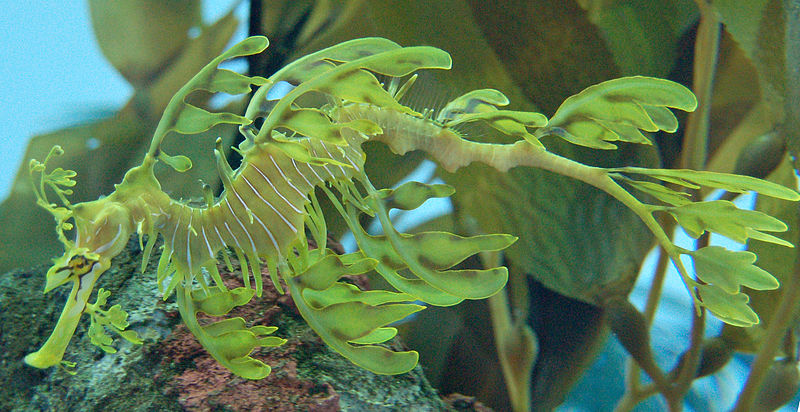
Biology: Leafy Sea Dragon


The leafy sea dragon is named for its resemblance to a floating piece of seaweed and a dragon.


The lobes of skin that grow on the leafy sea dragon give it the appearance of seaweed, allowing it to camouflage with its surroundings. Its leafy appearance also enables it to appear to move through the water like a piece of floating seaweed.The leafy sea dragon propels itself by means of a pectoral fin on the ridge of its neck and a dorsal fin on its back closer to the tail end.

It primarily eats crustaceans including plankton and mysids, but its diet also includes shrimp and small fish. Leafy sea dragons oddly enough do not have teeth, which is rare amongst animals that eat small fish and shrimp.

The leafy sea dragon is found only in the waters of Australia.

Sources: Wikipedia

Monday, 15 February 2010

Social Studies: Mykonos Windmills


Mostly built by Venetians in the 16 century, the Mykonos Windmills were an innovative way to utilize the gusty wind that blows across Mykonos island in Greece.

Mykonos was a major seaport between Venice and Asia. The need to refine grain was high and the strong winds of Mykonos made it an ideal spot for windmills. All of the windmills look similar, being white and round with a pointed roof. The windmills were of great importance, but because modernization they are no longer operational. The last windmill operated until the 1960s. Today, seven of the windmills have been preserved out of ten (once there were more than twenty on the island).

Sources:
greeka.com
MykonosTour.com
Wikipedia

Photo:
Wikimedia Commons

Friday, 12 February 2010

Social Studies: SS Nornen Wreck


The shipwreck in Somerset, England.


The ship ran aground (hit the shore) on March 3, 1897.

Sources: Wikipedia

Monday, 8 February 2010

Social Studies: Mahé Island and Jellyfish Tree


Beach at Mahé Island, Seychelles.


Mahé is the largest island of the Seychelles, located in the Indian Ocean of the east coast of Africa. The population of Mahé is 80,000. It contains the capital city of Victoria and accommodates 90% of the country's total population.

Mahé was first visited by the British in 1609 and not visited by Europeans again until Lazare Picault's expedition of 1742. Mahé remained a French possession until 1812 when it became a British colony. It remained a colony until 1976 when Seychelles became an independent nation.

Like the rest of Seychelles, Mahé is a popular tourist attraction with beautiful beaches, mountains and forests. The capital city Victoria has great shopping. But another thing that makes Mahé special are the native plants found only in Seychelles. One example is the Jellyfish Tree, the flowers resembling jellyfish.

The plant was thought to be extinct until a few individuals were discovered in the 1970s.


Jellyfish Tree foliage and flowers.


Sources: Wikipedia
go2africa.com

Friday, 5 February 2010

Social Studies: Skeleton Coast


The name sounds ominous and for good reason.

The coast is named for the bleached whale and seal bones which covered the shore when the whaling industry was still active, as well as the skeletal shipwrecks caused by rocks offshore in the fog. . The Skeleton Coast is is the northern part of the Atlantic Ocean coast of Namibia and south of Angola. The coast is line with a sand dune desert.


Rusting ship hull.


On the coast the upwelling of the cold Benguela current gives rise to dense ocean fogs for much of the year. There is a constant, heavy surf on the beaches making it impossible to launch a human-powered boat from shore.

Many of the plant and insect species of the sand dune systems depend for their moisture on the thick sea fogs which engulf the coast and windblown detritus from the interior as food.

Sources: Wikipedia
(Book) Ocean by The American Museum of Natural History.

Monday, 1 February 2010

Social Studies: Hearst Castle


Main House at Hearst Castle.


Originally a campground on a ranch started by George Hearst, Hearst Castle is located near the community of San Simeon, California approximately 250 miles (400 km) from both Los Angeles and San Francisco.

William Randolph Hearst, son of George Hearst inherited the ranch, which had grown to 250,000 acres (1,012 km2) and fourteen miles of coastline in 1919. Hearst was tired of camping in tents.

" I’m getting a little too old for that." He said.

So he approached architect Julia Morgan with the idea to build something on the ranch. Construction began in 1919 and continued through 1947 when Hearst stopped living at the estate due to ill health. Morgan persuaded Hearst to begin with the guest cottages because the smaller structures could be completed more quickly. Besides dwellings the huge estate had tennis courts swimming pools, a zoo, a cinema, and an airfield. Antique ceilings, Greek vases dating from 700 B.C., rare oriental carpets, and myriad works of art can be seen throughout William Randolph Hearst's vast home.


William Randolph Hearst (left) and Julia Morgan (Right) in 1926.


View from the air.


Sources:
Wikipedia
hearstcastle.org
http://www.cruisingwilbert.com/blog/uploaded_images/HearstCastle-712886.jpg

Monday, 25 January 2010

Social Studies: Haitian Revolution in Dates


Battle between Polish troops in French service and the Haitian rebels.

1789: Saint-Domingue (former French colony, now Haiti), produces of 40 percent of the world's sugar and is the most profitable colony the French own and is in fact the wealthiest and most flourishing of the slave colonies in the Caribbean. The lowest class of society was enslaved blacks, who outnumbered whites and free people of color by eight to one.

1791: Inspired by the French Revolution and principles of the rights of men, free people of colour and slaves in Saint-Domingue and the French and West Indies pressed for freedom and more civil rights.

1792:
  • French government sends three commissioners with troops to try to reestablish control.
  • Slaves control a third of the island.
1793:
  • France and Great Britain go to war, and British troops invade Saint-Domingue.
1794:
  • Toussaint L'Ouverture fought for the Spanish crown but agrees to fight for the the French if they free all the slaves.
Under the military leadership of Toussaint, the forces made up mostly of former slaves succeed in winning concessions from the English and expelling the Spanish forces. In the end, he essentially restores control of Saint-Domingue to France.

1798:
  • Toussaint defeats a British expeditionary force, and leads an invasion of neighboring Santo Domingo, freeing the slaves there by 1801
1 January 1804:
  • Former slaves proclaim the independence of Saint-Domingue. They declare the new nation be named Haïti, to honor one of the indigenous Taíno names for the island.
July 1825:
  • King Charles X of France sends a fleet of fourteen vessels and thousands of troops to reconquer the island. Under pressure, President Boyer agrees to a treaty by which France formally recognizes the independence of the nation in exchange for a payment of 150 million francs (the sum was reduced in 1838 to 90 million francs).
Sources: Wikipedia

Monday, 28 December 2009

Social Studies: Atacama Desert

Valle de la Luna (Moon Valley) near San Pedro de Atacama.because it is


The Atacama is one of the driest places on Earth, blocked from moisture on both sides by the Anand is virtually sterile des mountains and by the Chilean Coast Range. Evidence suggests that the Atacama may not have had any significant rainfall from 1570 to 1971. Some locations in the Atacama do receive a marine fog known locally as the Camanchaca, providing sufficient moisture for hypolithic algae, lichens and even some cacti. But in the region that is in the "fog shadow" of the high coastal crest-line, which averages 3,000 metres (10,000 ft) m height for about 100 kilometres (60 mi) south of Antofagasta, the soil has been compared to that of Mars.

The Atacama is sparsely populated. In an oasis, in the middle of the desert, at about 2,000 metres (7,000 ft) elevation, lies the village of San Pedro de Atacama.


Miscanti lagoon

Monday, 14 December 2009

Social Studies: Zeppelin NT


In the 1990s, the successor of the original Zeppelin company in Friedrichshafen, the Zeppelin Luftschifftechnik GmbH, reengaged in airship construction. The first experimental craft (later christened Friedrichshafen) of the type Zeppelin NT flew in September 1997. Though larger than common blimps, the Neue Technologie (new technology) Zeppelins are much smaller than their giant ancestors and not actually Zeppelin-types in the classical sense; they are sophisticated semi-rigids.

The Zeppelin NT airships constructed so far are 75 m long, with a volume of 8,225 m³. They are thus considerably smaller than the old Zeppelins, which reached a maximum volume of 200,000 m³. Furthermore, they are inflated exclusively with the non-flammable noble gas helium.

The design currently has a range of some 900 km (500 nautical miles) and reaches top speeds of 125 km/h (70 knots or 78 mph). The standard cruising speed of 70 km/h for tourist flights can be attained using the rear propeller only. Standard operational altitude is 300 m (1000 ft), but up to 2,600 m (8,500 ft) is possible. Their maximum permitted takeoff weight is 10,690 kg, with a payload of 1,900 kg.

The Zeppelin NT has a passenger capacity of 12, plus 2 crew, or the capability to lift 1,900 kg of payload.

Sources: Wikipedia

Monday, 2 November 2009

Social Studies: Reaching the summit of Everest.


Mount Everest from the south.


Named after George Everest a Surveyor-General of India, the summit of Everest is the highest point on the earths crust. There have been many attempts to reach it not all on foot. Here are some:

  • George Mallory discovered the northern approach in on his exploratory mission (unprepared to reach the summit.) climbed 7,007 metres (22,989 ft) in 1921.
  • A 1922 expedition under General Charles Granville Bruce and climbing leader Lt-Col. Edward Lisle Strutt. Climbed at 950 feet (290 m) per hour, and reached an altitude of 8,320 m (27,300 ft), the first time a human climbed higher than 8,000m.
  • On 8 June 1924 George Mallory and Andrew Irvine made an attempt on the summit from which they never returned.
  • Lady Houston, a British millionaire, funded the Houston Everest Flight of 1933, which saw a formation of airplanes led by the Marquess of Clydesdale fly over the summit in an effort to deploy the British Union Jack flag at the top.
  • Using conventional open-circuit oxygen, the summit was eventually reached at 11:30 a.m. local time on May 29, 1953 by the New Zealander Edmund Hillary and Sherpa Tenzing Norgay from Nepal climbing the South Col Route.
  • On May 16, 1976, Junko Tabei of Japan became the first woman on the crest.
  • In 1978 Reinhold Messner (Italy) and Peter Habeler (Austria) reached the summit, the first climbers to do so without the use of supplemental oxygen.
  • In 1980, a team from Poland on an expedition led by Andrzej Zawada made the first winter assent.
  • In 1999, on the North side of the mountain, as part of the Eric Simonson and Jochen Hemmleb's search expedition, Conrad Anker discovered the body of George Mallory at 8160m on the North Face.

There were countless more expeditions before and after the succesful climb by Hillary and Norgay, these are just a few, to see more click the source.

Source: Wikipedia

Monday, 19 October 2009

Social Studies: Toothpaste


The Greeks and Romans crushed bones and oyster shells (above) and added them to toothpaste as an abrasive.


The earliest known reference to toothpaste is in a manuscript from Eygypt in the 4th century A.D., which prescribes a mixture of iris flowers. In the 9th century, the Persian musician and fashion designer Ziryab is known to have invented a type of toothpaste, which he popularized throughout Islamic Spain.[2] The exact ingredients of this toothpaste are currently unknown,[3] but it was reported to have been both "functional and pleasant to taste.

It is unknown if these toothpastes were used alone or with things like rags or Neem Tree twigs as toothbrushes. Tooth powders for use with toothbrushes came into general use in the 19th century in Britain. Most were homemade, with chalk, pulverized brick, or salt as ingredients.

By 1900, a paste made of hydrogen peroxide and baking soda was recommended for use with toothbrushes. Pre-mixed toothpastes were first marketed in the 19th century, but did not surpass the popularity of tooth-powder until World War I. Fluoride was first added to toothpastes in 1914, and was criticized by the American Dental Association (ADA) in 1937. Fluoride toothpastes developed in the 1950s received the ADA's approval.

Neat Fact:

A homemade version of toothpaste can be made by mixing 3 parts baking soda and 1 part salt with: 3 teaspoons of glycerin, 10-20 drops of flavoring and 1 drop of food coloring.

Sources: Wikipedia

Monday, 12 October 2009

Social Studies: Research

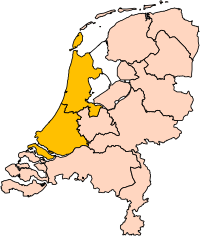
These are some geographical clarifications:


The Netherlands showing the region of Holland in yellow.


Holland is not a country.

It is the western region of The Netherlands.

Montenegro is not to be confused with Montevideo.

Montenegro is a European country and Montevideo is the capital of Uruguay.

Russia is part of Europe and Asia.

A region also known as Eurasia.

England is not the United Kingdom.

England is a country in the United Kingdom.

Australia is a country and a continent, but they are different.

The continent known as Australia includes: The Commonwealth of Australia (which is the country known as Australia), Papua New Guinea and portions of Indonesia.

Sources: Wikipedia

Monday, 5 October 2009

Social Studies - My Favoite Wonder: Medieval World

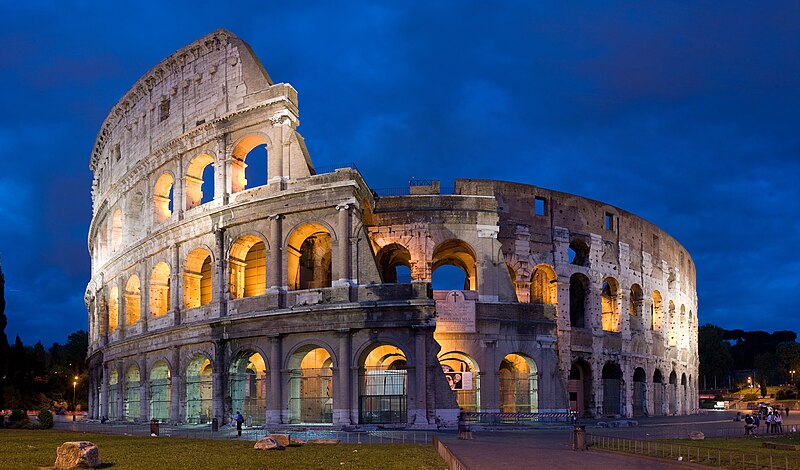
Colosseum


The Colosseum is elliptical in plan and is 189 meters (615 ft) long, and 156 meters (510 ft) wide, with a base area of 6 acres (24,000 m2). The height of the outer wall is 48 meters (157 ft ). The perimeter originally measured 545 meters (1,788 ft ). The central arena is an oval (287 ft) long and (180 ft) wide, surrounded by a wall (15 ft) high, above which rose tiers of seating.

Construction of the Colosseum began under the rule of the Emperor Vespasian in around 70–72AD. The site chosen was a flat area on the floor of a low valley between the Caelian, Esquiline and Palatine Hills, through which a canalised stream ran. The Colosseum had been completed up to the third story by the time of Vespasian's death in 79. The top level was finished and the building inaugurated by his son, Titus, in 80.

In 217, the Colosseum was badly damaged by a major fire (caused by lightning, according to Dio Cassius) which destroyed the wooden upper levels of the amphitheatre's interior. It was not fully repaired until about 240 and underwent further repairs in 250 or 252 and again in 320.

The Colosseum underwent several radical changes of use during the medieval period. By the late 6th century a small church had been built into the structure of the amphitheatre, though this apparently did not confer any particular religious significance on the building as a whole. The arena was converted into a cemetery. The numerous vaulted spaces in the arcades under the seating were converted into housing and workshops, and are recorded as still being rented out as late as the 12th century.

Around 1200 the Frangipani family took over the Colosseum and fortified it, apparently using it as a castle.

Severe damage was inflicted on the Colosseum by the great earthquake in 1349, causing the outer south side, lying on a less stable alluvional terrain, to collapse. Much of the tumbled stone was reused to build palaces, churches, hospitals and other buildings elsewhere in Rome.

Sources: Wikipedia

Friday, 2 October 2009

Social Studies Picture Blog: Kazimierez Nowak

A a stereotypical explorer, Kazimierez Nowak was a Polish traveller, correspondent and photographer, born in Stryi. From 1931 to 1936, he travelled alone, on foot and by bicycle across Africa, covering a distance of 40,000 km. He was probably the first man in the world to do this.

Monday, 21 September 2009

Social Studies: Henry Morton Stanley Part 1


Henry Morton Stanley (on right) in 1872


Stanley was born in Denbigh, Wales on January 28, 1841(1841-01-28)..

Following the Civil War, Stanley began a career as a journalist. As part of this new career, Stanley organised an expedition to the Ottoman Empire that ended catastrophically when Stanley was imprisoned. He eventually talked his way out of jail and even received restitution for damaged expedition equipment. This early expedition may have formed the foundation for his eventual exploration of the Congo region of Africa.

In 1867, Stanley was recruited by Colonel Samuel Forster Tappan (a one-time journalist) of the Indian Peace Commission, to serve as a correspondent to cover the work of the Commission for several newspapers. Stanley was soon retained exclusively by James Gordon Bennett (1795-1872), founder of the New York Herald, who was impressed by Stanley's exploits and by his direct style of writing.

He became one of the Herald's overseas correspondents and, in 1869, was instructed by Bennett's son to find the Scottish missionary and explorer David Livingstone, who was known to be in Africa but had not been heard from for some time.

This 700-mile expedition through the tropical forest became a nightmare. His thoroughbred stallion died within a few days after a bite from a Tsetse fly, many of his carriers deserted and the rest were decimated by tropical diseases.

Stanley found Livingstone on 10 November 1871, in Ujiji near Lake Tanganyika in present-day Tanzania, and may have greeted him with the now famous, "Dr. Livingstone, I presume?" This famous phrase may be a fabrication, as Stanley tore out of his diary the pages relating to the encounter.

Sources:Wikipedia

Followers

About This Blog

I am a grade nine student living in Mexico. This is my home school education blog. I post the things I learned during the week on this blog. I hope you can learn things from this too.


  © Blogger template 'Photoblog II' by Ourblogtemplates.com 2008

Back to TOP